Book Reviews!
Bookbug club specific reviews can be found on that page
currently reading:
One, None, and a Hundred Grand by Luigi Pirandello (bookbug)
Halo: Shadows of Reach by Troy Denning
Kitty Cat Kill Sat by Argus (audiobook)

Breaking news: Local supersoldiers kill aliens, more at 11.
So many of the other novels have explored so many other parts of the Halo universe, so it's nice to get in some good ol' Master Chief vs. the Covenant to ease back into the swing of things. Lots of little flashbacks were coming to me throughout the whole book, which was nice. I don't know if I'd reread all like 17 of the prior Halo novels that I've read lol.
There were quite a few good twists and turns in the story, some obvious, some not. I enjoy how they always take space to play around with different character perspectives, including among the Covenant.

A little heavy handed at times with how much they called out the dramatic irony of not knowing what the enemy is doing while providing both perspectives, but otherwise another solid entry. Netherop is a really neat world, very alien feeling while still slotting right into the universe. The sangheili were very nicely characterized with the struggle between doctrine and belief. It's a funny thing that in order to make a sympathetic alien villain you have to humanize them, but I doubt they would appreciate that.

Almost a bit of a guilty pleasure because it's not in my usual genre wheelhouse. Also other guilty pleasures (Darlington...). Excellent binge entertainment. Highly recommend. Maybe 5 stars for book one, 4 stars for book two.
I think things should have stayed strictly hell/demon/occult and leave out the other more popular monster, but at least they're more Underworld and less Twilight. There's plenty enough freaky shit going on to dilute it anyways, though.
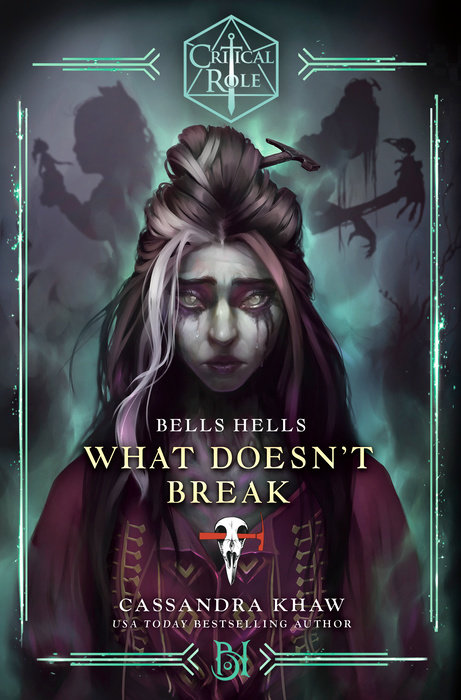
Listened to the audiobook at work so my average attention was probably 70%, but I enjoyed it quite well. Laudna isn't my favorite character, but Delilah is way up there (plus Grey Delisle voicing). Thankfully fairly light on the Pate lol.
I really enjoy the parallel of Delilah/Silas being alone against the world and the choices they made, with Delilah/Laudna being alone against the world and the choices she makes. Evil people really do just be evil sometimes, no excuses.

John Green, the human, is not for me. Being a book about John Green primarily makes this a book not for me. I find in him a great fear of mine, and it's difficult to come to terms with. Here is a man with a wife and kids, a true brother, a wise father, lifelong friends and esteemed colleagues, acquaintances and fans, a man who smoked in middle school and drank in high school, a man who enjoys sports and poetry and can write a successful novel about his own experiences. Here is a man who has so many things that some parts of me want or wanted to have, to be, and he still despairs. A man with so many answers, with the imparted knowledge of centuries of the most acknowledged literary minds, who still finds in himself a mind that will not accept those answers as good enough. He poses his own despair with commendable transparency, but provides only his own personalized solutions to his own personalized dread. I think I find the book to be selfish in the way that every human's experience is ultimately a selfish one. I wish he'd talked less about himself, and more about me.

An enjoyable read, not without some flaws but overall nothing worth docking a star for. Fun and engaging throughout.
The world-building is excellent, easily the best part of the book, with details and hints laid throughout that gradually build something both more complete and more mysterious. Each setting feels unique, the defining characteristics don't leave things feeling one-dimensional, and it's fun (or scary) to explore along with the main character. There's a lot of juice left to squeeze there in the sequels.
Characters can feel a little weak at times or have predictable plot beats that they are written to serve. They're not without depth but they rarely feel like their own whole person, many side characters especially. The relationship with his wife I think is well done, and how it evolves. The origin of their relationship is questionable though, not a fan of that whole thing.
It does suffer a bit from the typical book one flaw of "this needs an ending in case I never get around to finishing the series" so the last quarter of the book is super fast paced compared to the rest. A very fun, chaotic quarter though. Time acceleration does leave character evolution feeling a little bit convoluted, but not in a way that's unbelievable. More just like, having to adapt to new character traits that the main character has seemingly already mostly adapted to, despite it being a one-pov story about him. He never really takes time to reflect on the extent of his changes specifically, more just acknowledges that they're there and keeps on trucking, but he hasn't really had time to either.
I think the recurrence of one of the characters being so near the end also made it feel more forced as an interesting plot point than something that might have naturally developed. It works from an adventure book standpoint - it doesn't need to be a masterpiece - just that it could have used a little more time in the oven, I think. But hey, there's sequels! and she is one of the better characters.
The meta-commentary on social structures and human nature etc. is present but not really the focus. This is something that also seems more apparent through the world-building than through the characters/plot. Would like to see a bit more of that later, where there's always more time to waffle poetically.

Gonna DNF this just bc I've read it before and 450 pages of it is a Lot, and I'd rather be reading something else. I'm most of the way through again and it's feeling pretty samey. Parts of the book are absolutely hilarious, but it throws a lot at the wall and not everything sticks. The timeline being loopty doopty is hard to manage, adding as much chaos into the story as there is chaos in the story already. aaand it's definitely a book written in the 60s about soldiers in the 40s, so there's lots of stuff that isn't up to 21st century social standards even with the context of it being heavy satire / dark humor.
Kinda the more I'm thinking about the book the less I care to defend it lol. It's funny and not without merit, but I don't know that I'd recommend it for any particular reason. Nothing in it has really hit me other than some parts of some characters being relatable, but that follows the same track of throwing a lot at the wall etc. Relating to the meek outsider who misses his wife, that's so me. I don't even have a wife.
It might also just be the fact that the current administration's leadership in a war that they started is just as bad and far less funny.

Stealing some excerpts from my diary but also focusing more on the book itself and not my own tangents
I watched iCarly growing up so I knew of her. Was more of a Miranda Cosgrove guy bc of Drake and Josh though. I did watch her Last Meals epi, which was great, as they all are. I also don't have strong attachments to pretty much anything from childhood if I haven't relived it in adulthood (like ATLA) so I have no real memory of the show that's separable from other sporadic memories of other shows.
Having her childhood so mapped out is an astounding amount of effort by itself, but for it to be the level of fucked up that it is and to persevere in recreating it in a fashion that sounds as truthful as it could be given the nature of memory is such a strength of will that I madly respect. I'm sure parts of it were easier due to the documented nature of her mother's hoarding and being a child/teen/adult-ish actress, but it's all very cohesive and powerful and horrifying. Telling it to the world is another thing entirely, and she does it very well.
I can't begin to touch on the issues with her mother. Not qualified other than as a fellow human being to say that sucks.
I was surprised by some of the things that weren't as important as I might otherwise have thought, though with how much she had going on at all times I can't say it's too surprising. OCD didn't seem to be much more than a fact of life for her. I don't know much about it still, but either it wasn't connected much to her overall wellbeing or it just wasn't stated to be. Mom and Eating Disorder disorder stuff just vastly overpowered it. Mormonism also didn't seem to have much negative effect, outside of normal social stuff that would have found some other way to be present in her life (e.g. being told her family is likely to go inactive by some other girl; outsider-ism is definitely not unique to Mormons). Honestly the restraint around sex probably helped her out for a while, not that there wasn't a ton of other issues that made early relationships awful for her.
My favorite thing in the whole book is that she never named the showrunner. There's so much power in names, and just as much in not using them. Edmond Dantes not being named for hundreds and hundreds of pages in The Count of Monte Cristo always gets me thinking about that, how much it defines a person and how vulnerable it can be to be named or to not be named. Whittling a horrible, abusive, powerful man down into a job title is no less than he deserves, though calling him The Creator does build a sort of mysticism that maintains that air of unassailable power for better or worse. I only vaguely remember hearing stuff as it came out about all that, but the firsthand accounts she gave were all just so icky and skin-crawling. I'm sure it was good for her to be able to recount that in the same manner and detail as everything else, with its relevance to her growth.
I'm also so happy to hear that she and Miranda were actually great friends for a long long time! That's awesome.
Relationship stuff is really hard to figure out, and this book was not about her figuring that out. Her second book might be? But it's still a pretty bad area for me to dwell in personally, so I probably won't read that any time soon. It was... interesting to hear her experiences. Men can be so gross. Horny is a blight upon humanity. The unabridged nature of some of the scenes definitely was an artistic choice lol, but sex is a powerful thing and it's not inappropriate to let it be an equally powerful narrative tool when it's so directly relevant to relationships.
The therapy saga was so blessedly heartwarming in all of its struggles and small victories. The universal, inescapable truth that you're going to therapy because you're in love with somebody and want to be better for them. The secondhand pride of her going her first 24 hours without purging, and the fall of facing the deeper issues that such a small reprieve will inevitably uncover. Worksheets, journaling, crying over the stupidest shit that nobody else would cry over but its the biggest thing in the world for you in that moment. The slow, crawling, molasses in winter pace of progress, that you can look back on years later and see how fucking far you've gone and be so proud because you know the work and the struggle and the cost and the time. Being on the far side of your issues and seeing other people in a different light who haven't made that same journey yet. Looking her past dead in the eye and saying what it is. Knowing it's not over. Ever over.
The book is obviously a therapy exercise. I've done similar stuff in my own completely not-ED related therapy. Especially when writing as an act is so valued to the writer, being able to tell your own story in your own words and know it and assert it and validate it, it's such a powerful tool. Nothing is worse than not knowing why you're fucked up, but knowing that you are; and going to therapy and having them be like, so easily able to pick apart your brain in ways that you never could do yourself, it's embarassing and humiliating and humbling and validating all at the same time. It's the same way that teaching a subject makes you know it more completely. A therapist teaches, but you still have to learn it for yourself. It certainly isn't enough to know the story; real change takes real work, and she did well at showing that too.
I need to go back to therapy tbh, but writing so much lately is doing an okay job too. Thanks, Jennette.